
Garmin GFC 500 autopilot installation,
planned around the actual airplane.
Eligibility review · quote planning · servo installation · navigator integration · functional checks
The GFC 500 is not just another box in the panel.
The Garmin GFC 500 is a digital autopilot upgrade for eligible piston aircraft. When it is planned and installed correctly, it can bring GPSS steering, altitude hold, vertical-speed and indicated-airspeed modes, flight-level-change behavior, and coupled approach capability when paired with the right Garmin navigator and aircraft configuration.
RWAS handles GFC 500 installation planning from a certified Garmin dealer and FAA Part 145 repair-station environment. That matters because an autopilot project touches flight controls, servos, wiring, panel controls, software configuration, placards, flight manual supplements, functional checks, and return-to-service documentation.
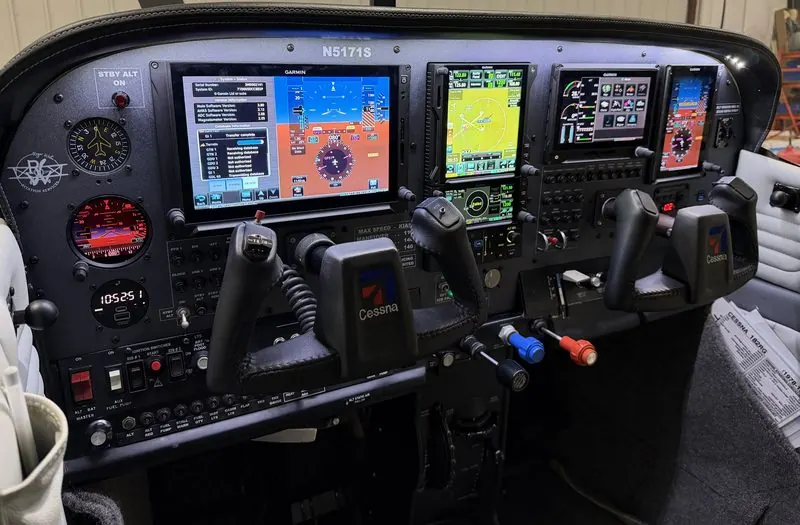
Autopilot work is system work: display, navigator, controls, servos, wiring, and aircraft eligibility have to line up.
The first question is whether the aircraft fits the approved path.
A GFC 500 quote starts with the aircraft make, model, serial number if available, existing avionics, current autopilot or wing-leveler status, and the owner's mission. RWAS reviews eligibility, required supporting equipment, installation data, and whether the aircraft's current panel and systems make the proposed upgrade practical.
This is where many autopilot conversations go wrong. A forum thread may say the airplane is eligible, but the real installation still depends on the exact aircraft, installed equipment, configuration, and condition.
From quote to functional check.
RWAS scopes the GFC 500 as an aircraft project, not just a parts order. The goal is to define the install path before the aircraft is opened up, then document the work clearly enough that the next mechanic understands what was changed.
Aircraft and mission review
Confirm the model, serial/applicability context, current equipment, and what the owner expects from the autopilot.
Panel and navigator integration
Review how the GFC 500 will interact with displays, GTN Xi navigators, attitude sources, and existing panel layout.
Servo, wiring, and structure planning
Plan the physical installation around aircraft access, wire routing, brackets, clearances, and inspection requirements.
Configuration and testing
Software/configuration checks, ground functional tests, documentation, and return-to-service workflow.
Send the panel photos before asking for a number.
Useful GFC 500 quote requests include aircraft make/model, N-number, serial number if available, current panel photos, existing navigator and display equipment, current autopilot details, recent maintenance concerns, and desired install timing. If you are also considering a GTN Xi, G3X Touch, GI 275, G5, or panel fabrication work, say that up front so the quote can be planned as one system.
Autopilot projects often expose the rest of the panel.
Some aircraft are good candidates for a focused autopilot install. Others make more sense as part of a phased Garmin upgrade that includes a navigator, display, audio panel, transponder, or fabricated panel. RWAS can help owners decide whether to stage the work or bundle it into a larger downtime window.
Related reading
Garmin Expands GFC 600 Approval for Cessna 310 Models
Garmin has received FAA STC approval for GFC 600 autopilot installations in additional Cessna 310-series twins, including the 310P/T310P,…
Garmin Announces 2026 Autopilot Rebate Program
Garmin has announced a 2026 autopilot rebate program, creating a useful planning window for aircraft owners who have been considering a certified…
Garmin Expands GFC 500 Autopilot STC Coverage to Additional Airframes
Garmin International has announced expanded STC coverage for its popular GFC 500 digital autopilot system, adding approved installations for the…