
Why FAA Part 145 oversight changes the quality system, accountability, and long-term value behind aircraft maintenance.
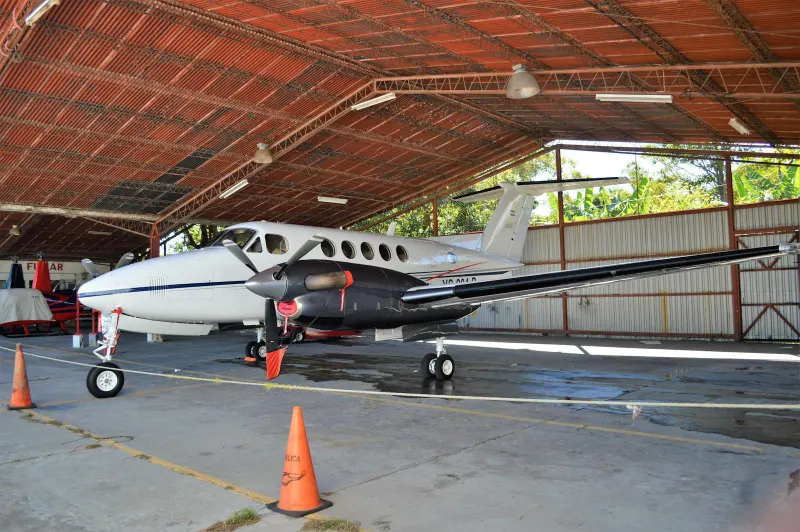
A Part 145 repair station is an FAA-certificated maintenance organization, governed by 14 CFR Part 145, that may maintain or alter only the articles covered by its ratings and operations specifications. It must follow an FAA-accepted repair station manual and quality control system, train its people, and keep records the FAA can inspect at any time. An A&P, by contrast, is an individually certificated mechanic.
What Is a Part 145 Repair Station?
A Part 145 repair station is a maintenance organization certificated by the FAA under 14 CFR Part 145. Instead of licensing one person, the FAA certificates the organization: its facilities, equipment, technical data, personnel, and procedures. The station may maintain or alter only the articles covered by its ratings and operations specifications, and only when it has the data, equipment, and facilities the work requires (§145.201).
To hold and keep that certificate, a repair station must maintain:
- A repair station certificate and operations specifications, available on the premises for inspection by the public and the FAA (§145.5)
- An accountable manager who is responsible for all Part 145 operations and serves as the primary FAA contact (§145.151)
- A repair station manual and a quality control manual acceptable to the FAA (§145.207, §145.211)
- An FAA-approved employee training program with initial and recurrent training (§145.163)
- Inspection of every article by a qualified inspector before it is approved for return to service (§145.213)
- For limited-rated stations, a capability list backed by a documented self-evaluation of each article (§145.215)
- Maintenance records kept for at least two years, with a copy of the maintenance release given to the owner (§145.219)
- Service difficulty reports to the FAA within 96 hours of finding a serious failure, malfunction, or defect (§145.221)
The FAA may inspect a certificated repair station at any time to determine compliance (§145.223).
FAA Repair Station Ratings and Classes
A repair station's ratings define what it may work on. Section 145.59 establishes six rating groups: airframe, powerplant, propeller, radio, instrument, and accessory. Each group is divided into classes. Airframe classes separate composite from all-metal construction and small from large aircraft. Powerplant classes cover reciprocating engines of 400 horsepower or less, reciprocating engines above 400 horsepower, and turbine engines. Radio classes cover communication, navigation, and radar equipment. Instrument classes cover mechanical, electrical, gyroscopic, and electronic instruments.
Section 145.61 adds limited ratings. The FAA issues these for articles of a particular make and model, or for specialized services such as nondestructive inspection, testing, and processing; landing gear components; and aircraft fabric work. A station with limited ratings works from its capability list, which identifies each article by make and model. Whatever the rating, a repair station may not maintain or alter an article outside it.
RWAS's Repair Station Certificate
Roger Wilco Aviation Services holds FAA repair station certificate RWSR491E at Chan Gurney Municipal Airport (KYKN) in Yankton, South Dakota. RWAS holds limited Airframe, Radio, and Instrument ratings and a limited rating for nondestructive inspection, testing, and processing. The specific aircraft and articles covered are defined by our FAA-accepted capability list. See RWAS shop capabilities for the work we perform.
What an A&P Mechanic Can Do
An A&P mechanic — someone holding an Airframe and Powerplant certificate under 14 CFR Part 65 — is authorized to perform maintenance, preventive maintenance, and alterations on aircraft. They can inspect work they have performed and approve it for return to service. However, an individual A&P working alone operates without the structured oversight that comes with a certificated organization. There is no required quality system, no mandatory inspection procedures beyond what the mechanic personally follows, and no regulatory obligation to maintain a controlled reference library.
Adding Inspection Authorization (IA)
An Inspection Authorization (IA) adds the ability to perform annual inspections and approve aircraft for return to service after major repairs or alterations. An IA holder must meet recurrent training and activity requirements to keep the authorization current. While this represents a higher level of individual qualification, it still does not carry the organizational infrastructure that a repair station provides. The IA holder is, by regulation, an individual — not a system.
How a Part 145 Repair Station Differs
A Part 145 Repair Station is fundamentally different. It is an FAA-certificated organization with a published capability list, a required quality control manual, designated inspectors, and structured procedures for every task it performs. The FAA can inspect a repair station at any time, accepts its manuals, and holds the certificate holder accountable for systemic compliance — not just individual workmanship. When RWAS performs work under its certificate (No. RWSR491E), every step follows documented procedures, and a designated inspector verifies the work before return to service.
Why This Matters for Avionics Installations
For avionics installations, this distinction becomes especially important. Modern Garmin systems like the G3X Touch, GTN 650Xi/750Xi, and GFC 500 autopilot require precise wiring, software configuration, antenna placement, and system integration testing. A repair station's structured workflow ensures that installation drawings are followed exactly, that wire routing meets manufacturer specifications, that software loads are verified against the aircraft's approved configuration, and that functional checks are completed and documented before the first flight.
Documentation and Traceability
Documentation is another area where the repair station model delivers real value to owners. Every piece of work performed at a Part 145 station is backed by traceable paperwork — work orders, inspection records, parts traceability, and return-to-service entries that meet FAA standards. This documentation travels with the aircraft for its entire life. When it comes time to sell, a well-documented maintenance history from a certificated repair station commands confidence from buyers and brokers in a way that scattered individual logbook entries often do not.
Choosing Where to Have Work Done
For aircraft owners evaluating where to have maintenance and avionics work performed, the question is not whether A&P mechanics are skilled — many are exceptional. The question is whether the work will be performed within a system designed to catch errors, maintain standards, and produce documentation that protects the aircraft's value over time. That is what a Part 145 Repair Station provides, and it is the standard Roger Wilco Aviation Services holds itself to on every job.
To discuss maintenance or an avionics project, request a quote or call (605) 299-8178.